
Leading a Product Redesign
Core Competencies
Executive Influence
Roadmapping
Product Strategy
The Challenge
It was evident from watching users struggle that the product needed to change. Our flagship AI OSINT Analysis product had grown without the information architecture to support the way analysts actually worked — and I could see it in every session. I took a low-fidelity mockup of a different approach straight to leadership to make the case: this product needed a full IA overhaul, not a patch.
My Role
I was serving as co-Acting Product Manager for the first few months of project alongside an engineering colleague, until a full time product manager joined 3 months into the project. All three of us partnered closely to turn that early concept into a shared vision the whole organization could rally behind. I took a player-coach approach with my UXR/UXD team — staying hands-on in Figma to shape a product that better reflected OSINT analysts' real tasks and goals.
The bulk of my background is in UX Research, but this project asked me to move fluidly between all three of my strengths at once: designing the research plan, using AI tools to build out concept designs, and advocating for the user in front of executive leadership. Turning ambiguity into a shared vision — and a plan the team could actually execute against — is where I do my best work.
Double-click to edit...
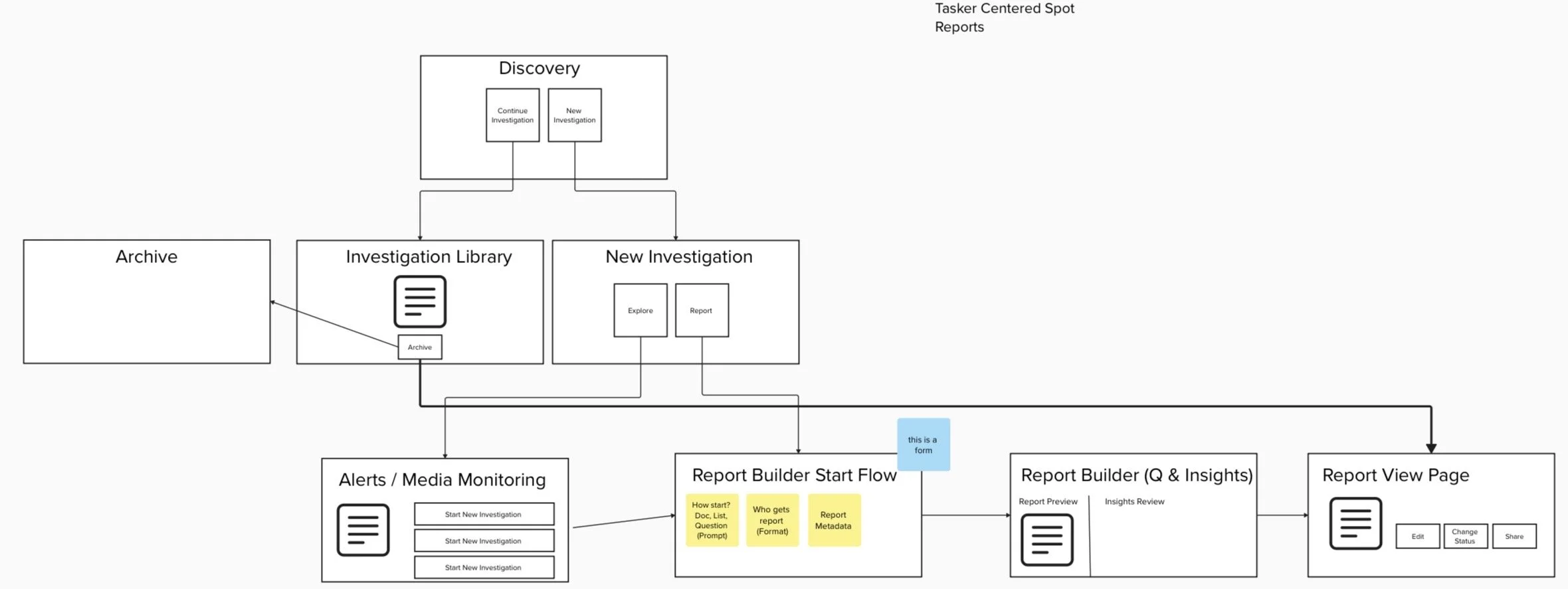
Before: Information Architecture
Features did not work together
Information difficult to track
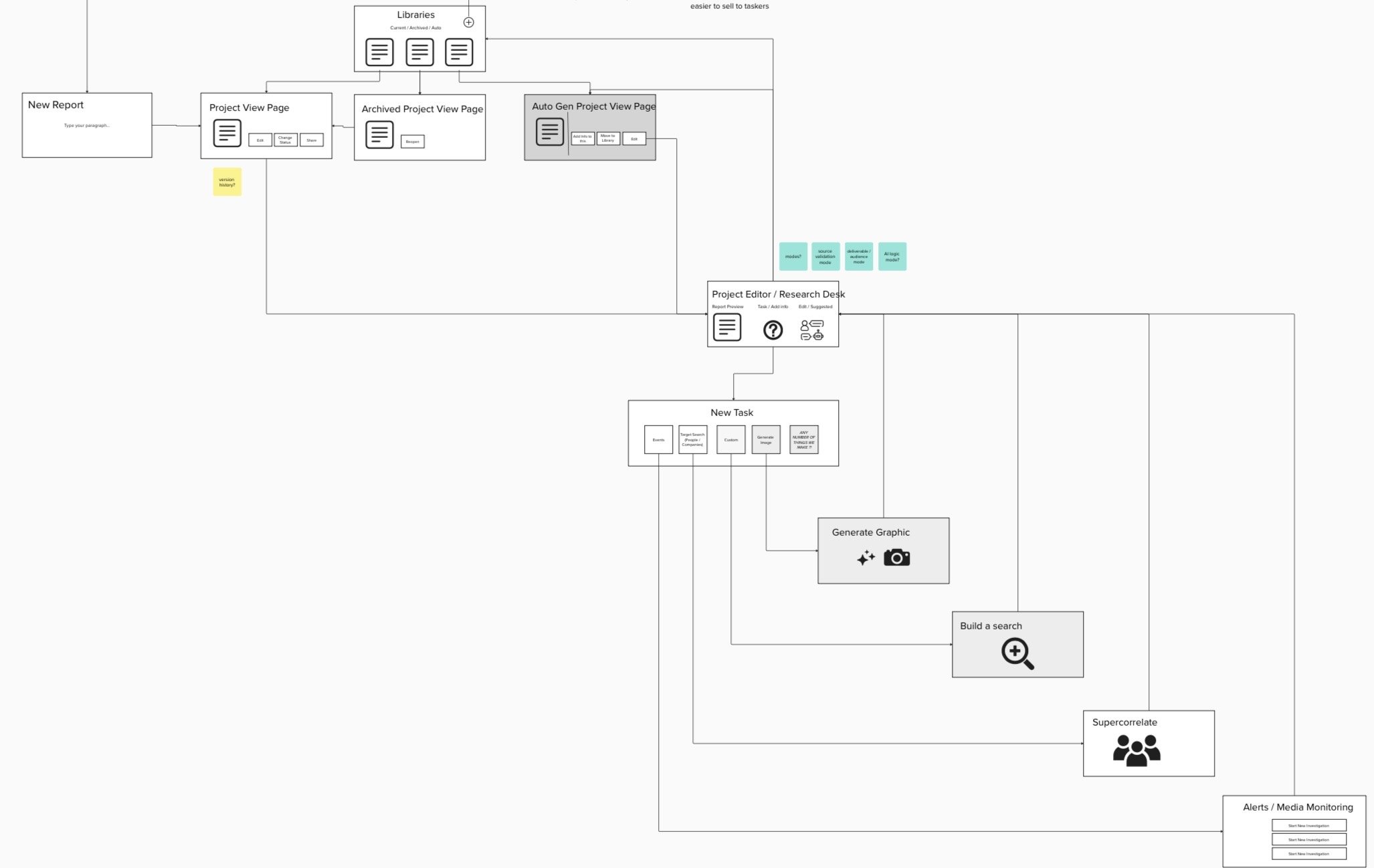
Product Redesign Concept
Traceable source material
Flexible information management
The Process
Over 9 months, my team and I took the redesign from concept to delivery: personas, user flows, site maps, high-fidelity prototypes, and a phased rollout plan, built through deep collaboration between UXR, UXD, and engineering. Although I assigned the projects taken on by the UX Team, none of it would have worked without that collaboration. Every deliverable was shaped by input across the team, not handed down from one function to another.
THE OUTCOME
Our Beta Test brought overwhelmingly positive user feedback, validating the IA direction we'd fought for. More importantly, the redesign helped lay the foundation for the business: Orbis Operations went from having no products to deriving 40% of its revenue from the redesigned product and the rest of the portfolio within 1.5 years.
STRATEGIC LESSON
I'm a magnetic collaborator. I know how to build a shared vision out of ambiguity, bring the right people into that vision, and lead a team through the work of making it real — without losing sight of the user or the business case the whole